
Performances
Performed in the library of Benjamin Britten’s home, The Red House, on his piano
October 2020
Programme: Britten's Notturno
This is one of Britten’s rare solo piano pieces and was provided as a ‘test piece’ for the Leeds International Piano Competition. There is hardly any piano music in Britten’s mature catalogue and only one (other than Night Piece) that he published in his lifetime: Holiday Diary, op. 5 composed in 1934. Night Piece belongs to a group of pieces with a nocturnal theme that Britten composed shortly after moving to The Red House.
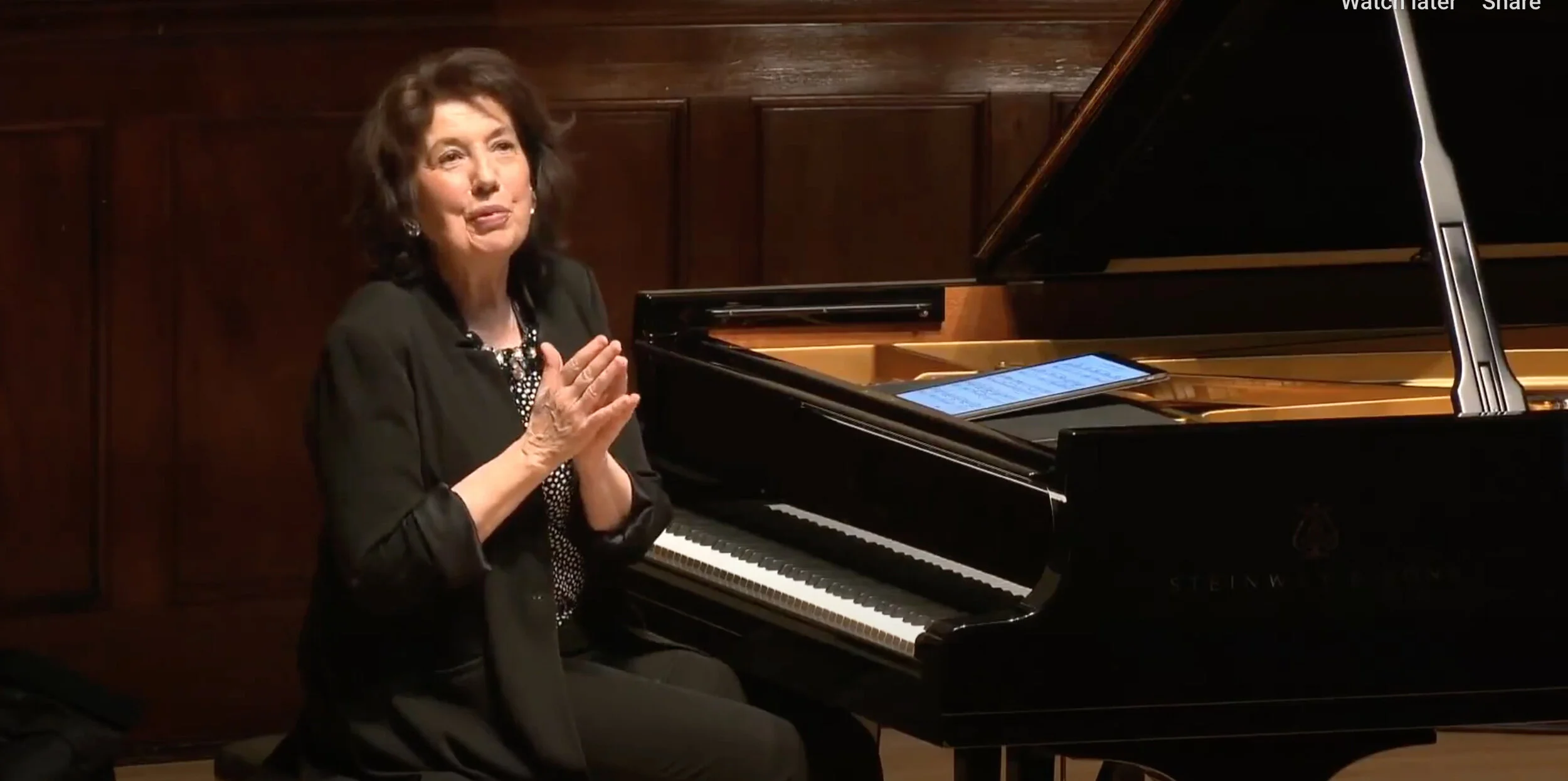
Temple Music Live Online
18 August 2020
Recorded live at Temple Church, London during the early days of the pandemic. Listen to Imogen speak about the pandemic and the music.
Programme
Franz Schubert, Moments Musicaux
Maurice Ravel, Jeux D’eau
Maurice Ravel, Sonatine
Maurice Ravel, Valses Nobles et Sentimentales

Wigmore Hall
15 June 2020
Franz Schubert, 12 Deutsche Ländler D790
Ludwig van Beethoven, Bagatelles op 119, Piano Sonata No. 31 in A flat op 110
Encore: Leoš Janáček, Dobro noc! (Good Night! from On an Overgrown Path)
Programme
70th Birthday Concert
Wigmore Hall
22 October 2019
Programme
Franz Schubert, Piano Sonata in C minor D958
Franz Schubert, Piano Sonata in A D959
Franz Schubert, Piano Sonata in B flat D960
‘There is perfection in the way that profound sadness is finally transcended by a shift into heavenly major-key light, and it needs equal perfection, anchoring and inwardness in the playing. That Cooper achieved those qualities at the most profound level – the ideal of time becoming space – meant that the last two movements could seem superfluous: as in the "Unfinished" Symphony, Schubert seems to have said enough at the midway-point. Hyper-alertness and that unique diamantine quality Cooper's right hand brings to the upper register kept us hooked, though, to the headlong conclusion. For the bows, a standing ovation the Wigmore audience rarely grants, passionate devotion and gratitude, but no fuss. A place among the immortals is assured, but there are hopefully many more years of pianistic revelations to come.’
David Nice, The Arts Desk, 23 October 2019